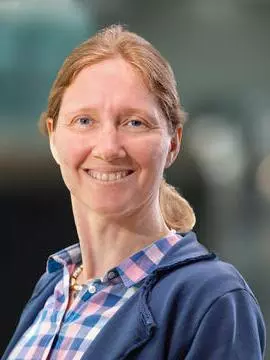
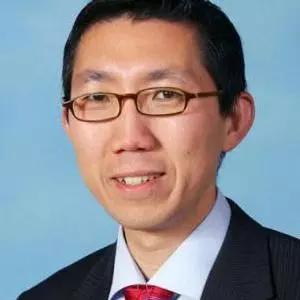
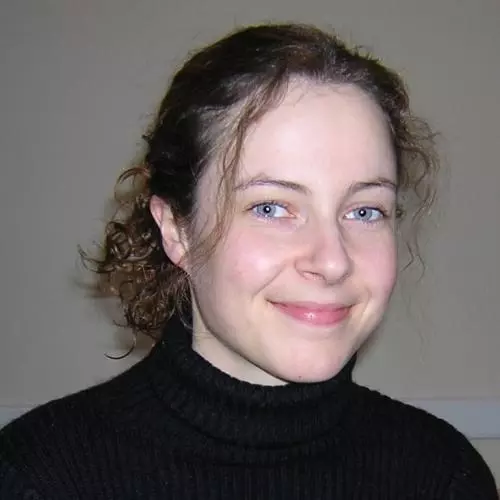
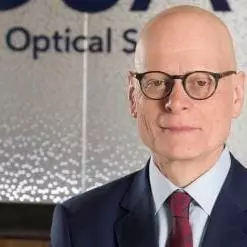
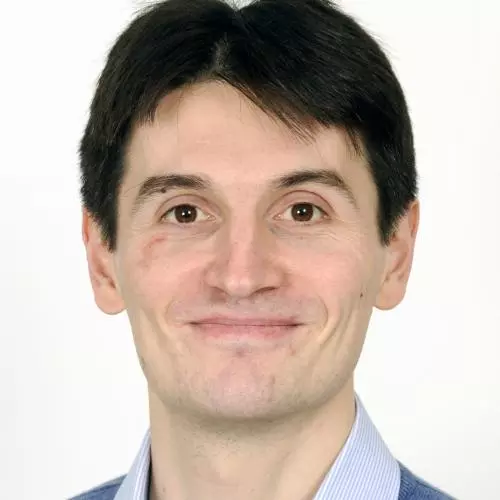
Professor Nynke Dekker at Oxford conducts pioneering single-molecule biophysics research aimed at understanding how DNA, RNA and their associated molecular motors function in real time. Her lab combines high-precision techniques such as single-molecule fluorescence, magnetic and optical tweezers, and integrated force-fluorescence spectroscopy to visualize the dynamics of replisome assembly, replication fork progression, and chromatin interactions. They explore replication in eukaryotes, bacteria and viruses, including how accessory proteins, nucleosomes, and obstacles impact fidelity. Her work bridges physics, biochemistry and molecular biology to yield mechanistic insight into replication and its dysregulation in disease.
I use the techniques of X-ray crystallography and X-ray microscopy to study the structural biology of viruses.
Jin-Chong Tan
Professor of Engineering Science
I lead the Multifunctional Materials & Composites (MMC) Lab, where we develop nanoporous metal-organic frameworks (MOFs)
Robert Taylor
Professor of Condensed Matter Physics
I am interested in the optical properties of materials, particularly in the areas of nanotechnology and quantum computing.
Sarah Thomas
Associate Professor
My research interests are Photonic quantum technologies, Quantum networks, Light-matter interactions, Quantum memories
Alice Thorneywork
Associate Professor of Physical Chemistry and Royal Society University Research Fellow
Our research interests lie in the areas of experimental soft matter and nanoscale systems
Claire Vallance
Professor of Physical Chemistry
We employ novel time-of-flight imaging methods to study photon-induced and electron-induced molecular fragmentation processes and to carry out chemically-resolved imaging of surfaces.
Ian Walmsley
Director of the Oxford Quantum Institute
Research interests: Quantum information and computation; quantum materials; quantum optics and ultra-cold matter
Ben Williams
Associate Professor of Engineering Science
My research group develops and applies linear and non-linear optical diagnostic techniques to solve problems in thermofluids including heat transfer, mixing and combustion.