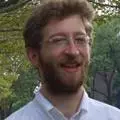
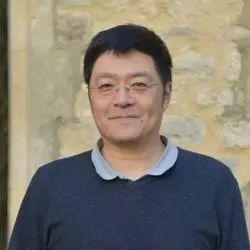
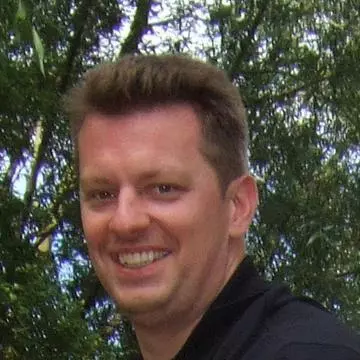
Professor Gianluca Gregori (Oxford) leads a research programme at the intersection of high energy density physics, laboratory astrophysics, and plasma science. His group uses powerful lasers and advanced diagnostics to replicate in the lab extreme astrophysical and planetary conditions - such as shock waves, turbulence, magnetic field generation, and dense plasmas - enabling controlled studies of phenomena that occur in stars, galaxies or planetary interiors. Gregori's experiments explore magnetic field amplification (dynamo processes), suppression of heat transport in magnetised plasmas, and particle acceleration in shocks. His recent work, supported by an ERC/Frontier grant, aims to push laboratory astrophysics beyond proof-of-principle into a tool for probing microphysical processes in extreme astrophysical settings (e.g. blazar jets, gamma-ray bursts) that are otherwise inaccessible to observation or simulation.
Matthew Fuchter
Professor of Chemistry
My research group focus is on functional molecules, chiral materials, and photoswitchable systems with applications across materials science, medicine and sustainable technologies
Gianluca Gregori
Professor of Physics
My research interests are: Laboratory Astrophysics; Fusion energy; Quantum plasmas; Fundamental physics with high-power lasers
Chao He
Associate Professor of Engineering Science
My research interests include polarisation optics, biomedical microscopy and vectorial imaging
Laura Herz
Professor of Physics
My research is focused on investigating nanostructured molecular and inorganic semiconducting materials
Doug Higgs
Emeritus Professor, Consultant Physician
We use state-of-the-art laboratory and computational approaches to understand how mammalian genes are switched on and off during development and differentiation and how this goes awry in human genetic diseases.
Felix Hofmann
Professor of Engineering Science
I’m interested in the effect of defects on material properties, ranging from single atom defects, such as vacancies and interstitials, to extended defects, such as dislocations, to macroscopic defects, for example cracks and voids.
Simon Hooker
Professor of Atomic and Laser Physics
I am interested in applications arising from the interaction of very intense laser radiation with matter.
Mark Howarth
Associate Professor
My research involves bionanotechnology and its application to cancer.
Wei Huang
Associate Professor of Engineering Science
My research interests include: (1) Synthetic biology; (2) Single cell Raman biotechnology; (3) Microbial evolution
Rob Jacobs
Facility Manger
My research interests are focused around applying state of the art instrumentation in surface science to novel problems.