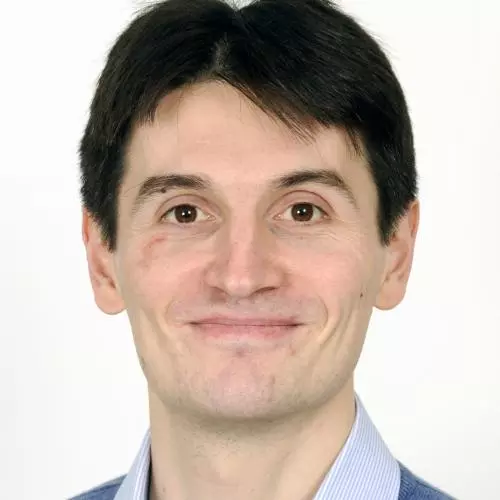
Professor Gianluca Gregori (Oxford) leads a research programme at the intersection of high energy density physics, laboratory astrophysics, and plasma science. His group uses powerful lasers and advanced diagnostics to replicate in the lab extreme astrophysical and planetary conditions - such as shock waves, turbulence, magnetic field generation, and dense plasmas - enabling controlled studies of phenomena that occur in stars, galaxies or planetary interiors. Gregori's experiments explore magnetic field amplification (dynamo processes), suppression of heat transport in magnetised plasmas, and particle acceleration in shocks. His recent work, supported by an ERC/Frontier grant, aims to push laboratory astrophysics beyond proof-of-principle into a tool for probing microphysical processes in extreme astrophysical settings (e.g. blazar jets, gamma-ray bursts) that are otherwise inaccessible to observation or simulation.
David Stuart
MRC Professor of Structural Biology
I use the techniques of X-ray crystallography and X-ray microscopy to study the structural biology of viruses.
Jin-Chong Tan
Professor of Engineering Science
I lead the Multifunctional Materials & Composites (MMC) Lab, where we develop nanoporous metal-organic frameworks (MOFs)
Robert Taylor
Professor of Condensed Matter Physics
I am interested in the optical properties of materials, particularly in the areas of nanotechnology and quantum computing.
Sarah Thomas
Associate Professor
My research interests are Photonic quantum technologies, Quantum networks, Light-matter interactions, Quantum memories
Alice Thorneywork
Associate Professor of Physical Chemistry and Royal Society University Research Fellow
Our research interests lie in the areas of experimental soft matter and nanoscale systems
Claire Vallance
Professor of Physical Chemistry
We employ novel time-of-flight imaging methods to study photon-induced and electron-induced molecular fragmentation processes and to carry out chemically-resolved imaging of surfaces.
Ian Walmsley
Director of the Oxford Quantum Institute
Research interests: Quantum information and computation; quantum materials; quantum optics and ultra-cold matter
Ben Williams
Associate Professor of Engineering Science
My research group develops and applies linear and non-linear optical diagnostic techniques to solve problems in thermofluids including heat transfer, mixing and combustion.