
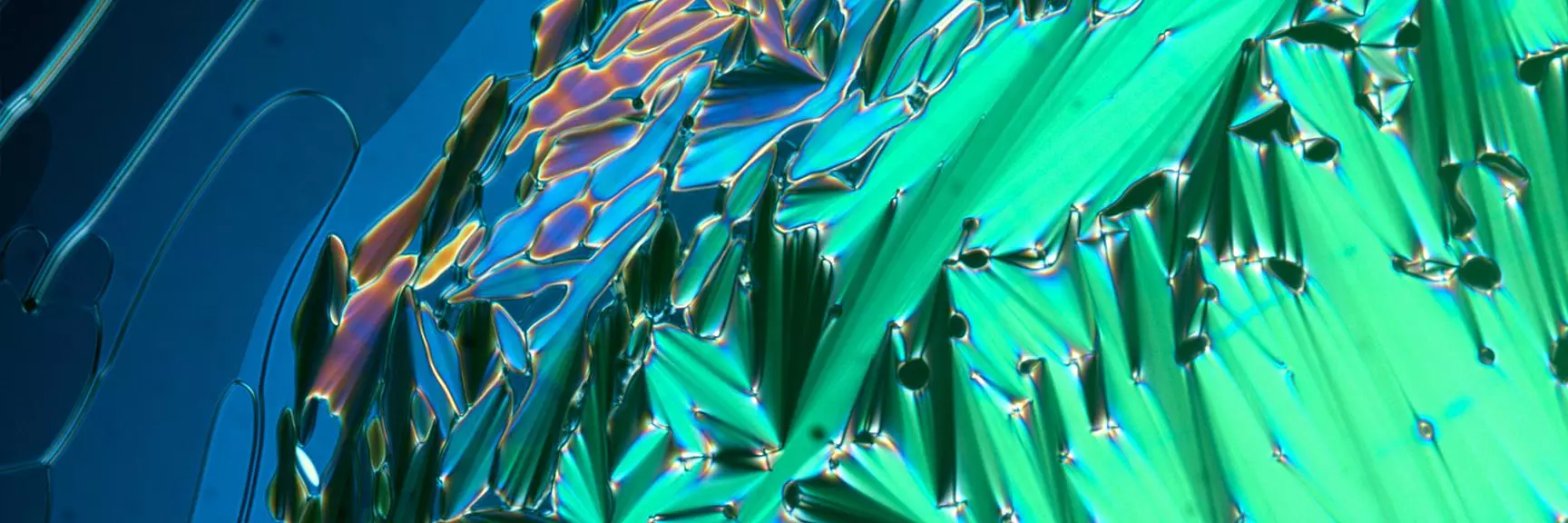
University of Oxford researchers at the forefront of development

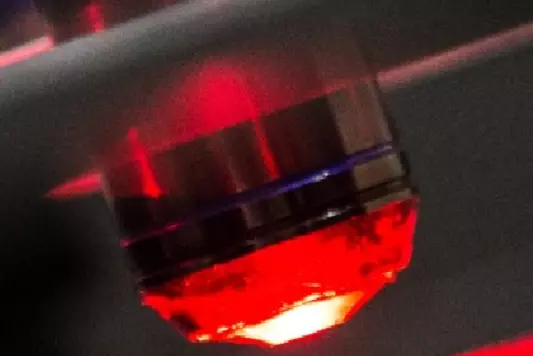
From quantum photonics and metrology to super-resolution optical imaging, biophotonics, ultrafast spectroscopy, sensing, and laser processing, Oxford offers both a diverse range of expertise and a vibrant photonics community in which to study and work. The Photonics Network was set up by researchers in Chemistry, Engineering, Materials, Physics and biomedical departments, to organise optics and photonics related events and a range of interdisciplinary collaborative work. Activities started in 2011 and have been growing ever since.  

Image
line


Oxford Photonics research areas

Biophotonics

BIOPHOTONICS

In biophotonics we aim to apply our optical expertise to the advancement of research on biological themes.
Imaging

IMAGING

Imaging is an important aspect of photonics research across many departments within the University
Spectroscopy

SPECTROSCOPY

Spectroscopy is a key component of any optical toolkit, providing non-invasive monitoring of the composition of a sample. 
Materials and devices

MATERIALS AND DEVICES

Research into photonics materials and devices enable us to transfer our optical knowledge to a platform which is stable and easy to use
lasercrop

OPTICAL PHYSICS

Research in optical physics allows us to understand the basic properties of light and its generation from a fundamental starting point, as well as forming an important precursor to future technology
Image
line

Photons

Photons provide both the briefest known events in the universe - optical pulses of order 10-16 seconds in duration - and the means to measure the age of the universe itself (1017 seconds) via the spectrum of microwave background radiation. The scope and use of photonics in the 21st century, over 50 years after the invention of the laser, is vast and continually expanding, as basic research in the generation, manipulation, interaction, and detection of light fuels scientific discovery, the creation of novel applications, and the invention and engineering of new materials and devices for use in our everyday lives.
Image
line


Oxford Photonics people

fuchter

Matthew Fuchter

My research group focus is on functional molecules, chiral materials, and photoswitchable systems with applications across materials science, medicine and sustainable technologies
gregori

Gianluca Gregori

My research interests are: Laboratory Astrophysics; Fusion energy; Quantum plasmas; Fundamental physics with high-power lasers
chao he preferred

Chao He

My research interests include polarisation optics, biomedical microscopy and vectorial imaging
Laura Herz

Laura Herz

My research is focused on investigating nanostructured molecular and inorganic semiconducting materials
doughiggs2

Doug Higgs

We use state-of-the-art laboratory and computational approaches to understand how mammalian genes are switched on and off during development and differentiation and how this goes awry in human genetic diseases.
Felix Hofmann

Felix Hofmann

I’m interested in the effect of defects on material properties, ranging from single atom defects, such as vacancies and interstitials, to extended defects, such as dislocations, to macroscopic defects, for example cracks and voids.
Simon Hooker

Simon Hooker

I am interested in applications arising from the interaction of very intense laser radiation with matter.
Mark Howarth

Mark Howarth

My research involves bionanotechnology and its application to cancer.
Wei Huang

Wei Huang

My research interests include: (1) Synthetic biology; (2) Single cell Raman biotechnology; (3) Microbial evolution
Rob Jacobs

Rob Jacobs

My research interests are focused around applying state of the art instrumentation in surface science to novel problems.

Latest news

Oxford Photonics Day 2026

Oxford Photonics Day 2025

Special Issue on Optics and Photonics at Oxford