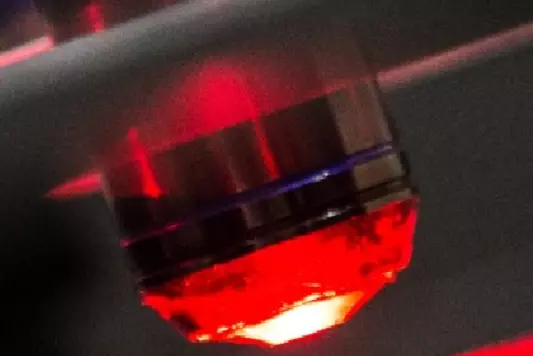

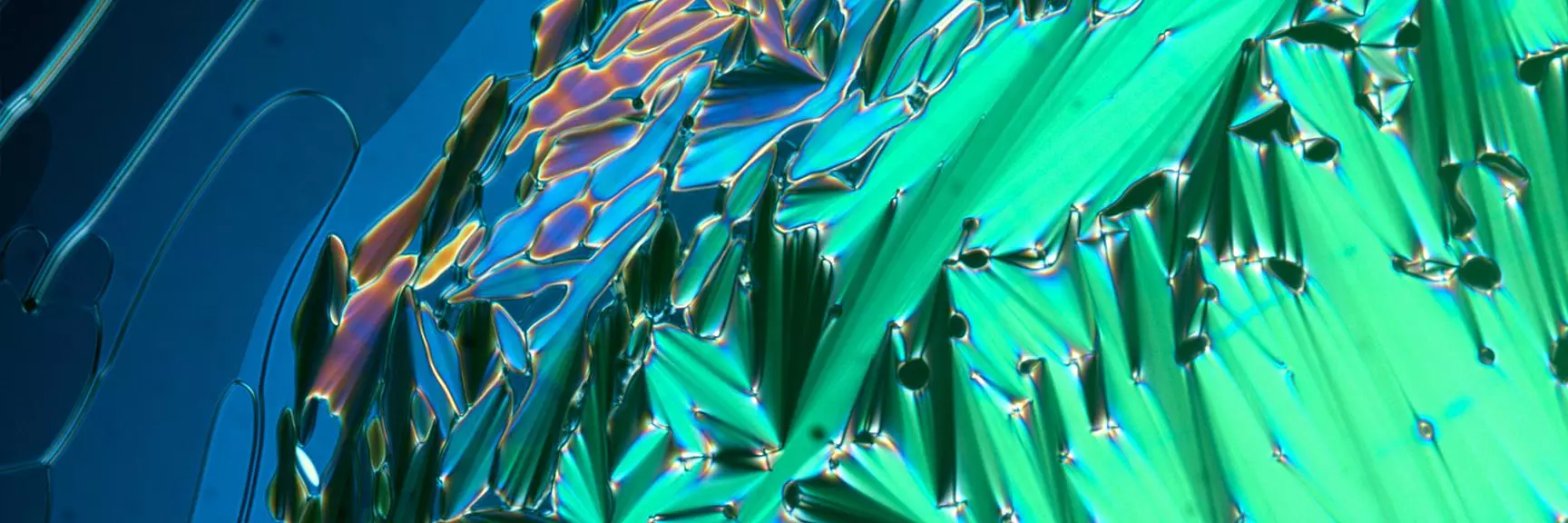
University of Oxford researchers at the forefront of development

From quantum photonics and metrology to super-resolution optical imaging, biophotonics, ultrafast spectroscopy, sensing, and laser processing, Oxford offers both a diverse range of expertise and a vibrant photonics community in which to study and work. The Photonics Network was set up by researchers in Chemistry, Engineering, Materials, Physics and biomedical departments, to organise optics and photonics related events and a range of interdisciplinary collaborative work. Activities started in 2011 and have been growing ever since.  

Image
line


Oxford Photonics research areas

Biophotonics

BIOPHOTONICS

In biophotonics we aim to apply our optical expertise to the advancement of research on biological themes.
Imaging

IMAGING

Imaging is an important aspect of photonics research across many departments within the University
Spectroscopy

SPECTROSCOPY

Spectroscopy is a key component of any optical toolkit, providing non-invasive monitoring of the composition of a sample. 
Materials and devices

MATERIALS AND DEVICES

Research into photonics materials and devices enable us to transfer our optical knowledge to a platform which is stable and easy to use
lasercrop

OPTICAL PHYSICS

Research in optical physics allows us to understand the basic properties of light and its generation from a fundamental starting point, as well as forming an important precursor to future technology
Image
line

Photons

Photons provide both the briefest known events in the universe - optical pulses of order 10-16 seconds in duration - and the means to measure the age of the universe itself (1017 seconds) via the spectrum of microwave background radiation. The scope and use of photonics in the 21st century, over 50 years after the invention of the laser, is vast and continually expanding, as basic research in the generation, manipulation, interaction, and detection of light fuels scientific discovery, the creation of novel applications, and the invention and engineering of new materials and devices for use in our everyday lives.

Image
line


Oxford Photonics people

Stuart Mackenzie

Stuart Mackenzie

My research in photonics revolves around the development of novel spectroscopic techniques applied to a variety of interesting scientific problems.
Stephen Morris

Stephen Morris

I am interested in the development and fabrication of novel optoelectronic devices based upon organic and inorganic me
norreys

Peter Norreys

My research interests are: high energy density plasma physics; inertial fusion; novel particle accelerators; extreme field science
Dominic O'Brien

Dominic O'Brien

My interests lie in the field of optical communications. Through advances in visible light communications, we aim to gain improvements in the bandwidth and/or efficiency of a data network.
Armin Reichold

Armin Reichold

My research interests lie in the field of optical metrology, encompassing absolute distance measurement systems and fibre based interferometry.
moritz

Moritz Riede

Our work focus's on organic semiconductor materials and organic photovoltaics
Grant Ritchie

Grant Ritchie

My research interests lie in ultrasensitive absorption spectroscopy and optical manipulation.
Jens Rittscher

Jens Rittscher

Our research is aimed at enhancement our understanding of complex biological processes through the analysis of image data.
patrick salter

Patrick Salter

Dr Patrick Salter is working on using short pulse laser fabrication to manufacture new functional devices.
Ekaterina Shamonina

Ekaterina Shamonina

My research covers metamaterials, electrodynamics, plasmonics, nanophotonics and microwave optics.

Latest news

Oxford Photonics Day 2026

Oxford Photonics Day 2025

Special Issue on Optics and Photonics at Oxford