
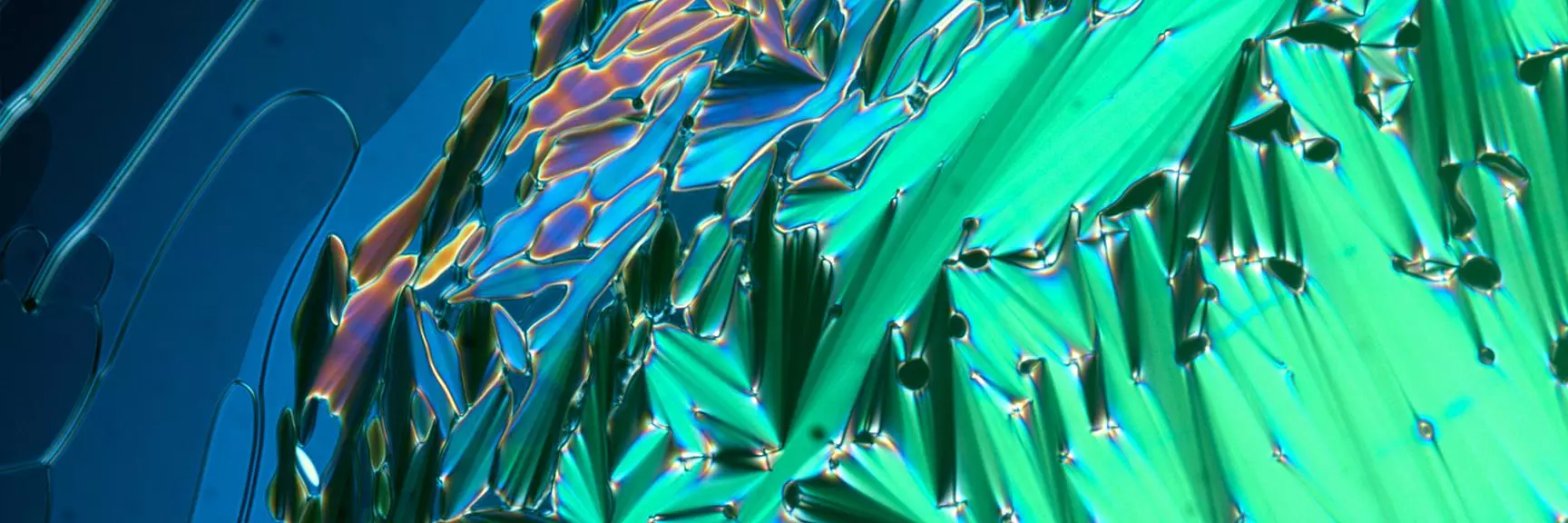
University of Oxford researchers at the forefront of development

From quantum photonics and metrology to super-resolution optical imaging, biophotonics, ultrafast spectroscopy, sensing, and laser processing, Oxford offers both a diverse range of expertise and a vibrant photonics community in which to study and work. The Photonics Network was set up by researchers in Chemistry, Engineering, Materials, Physics and biomedical departments, to organise optics and photonics related events and a range of interdisciplinary collaborative work. Activities started in 2011 and have been growing ever since.  

Image
line


Oxford Photonics research areas

Biophotonics

BIOPHOTONICS

In biophotonics we aim to apply our optical expertise to the advancement of research on biological themes.
Imaging

IMAGING

Imaging is an important aspect of photonics research across many departments within the University
Spectroscopy

SPECTROSCOPY

Spectroscopy is a key component of any optical toolkit, providing non-invasive monitoring of the composition of a sample. 
Materials and devices

MATERIALS AND DEVICES

Research into photonics materials and devices enable us to transfer our optical knowledge to a platform which is stable and easy to use
lasercrop

OPTICAL PHYSICS

Research in optical physics allows us to understand the basic properties of light and its generation from a fundamental starting point, as well as forming an important precursor to future technology
Image
line

Photons

Photons provide both the briefest known events in the universe - optical pulses of order 10-16 seconds in duration - and the means to measure the age of the universe itself (1017 seconds) via the spectrum of microwave background radiation. The scope and use of photonics in the 21st century, over 50 years after the invention of the laser, is vast and continually expanding, as basic research in the generation, manipulation, interaction, and detection of light fuels scientific discovery, the creation of novel applications, and the invention and engineering of new materials and devices for use in our everyday lives.


Image
line


Oxford Photonics people

Steve Sheard

Steve Sheard

My research interests are in the general area of optoelectronics, including integrated circuit based surface emitting laser devices, optically controlled smart tags, and optical sensors.
Jason Smith

Jason Smith

Our research focuses on the optical and electronic properties of solid state nanostructures for applications such as optoelectronics devices, quantum information processing and photovoltaics.
robsmith

Robert Smith

My research interests involve ultracold atoms
Hannah Smithson

Hannah Smithson

I use adaptive optics enabled ophthalmoscopes as a tool to investigate visual perception, aiming to answer such questions as "How do the neural circuits in human retina process colour information?".
Henry Snaith FRS

Henry Snaith FRS

Our research is primarily focused on developing the physics and technology behind low cost photovoltaic concepts.
Shankar Srinivas

Shankar Srinivas

Paul Stavrinou

Paul Stavrinou

My research interests span the development of materials (organic and inorganic) for photonic applications and optoelectronic device components.
lsteier

Ludmilla Steier

My research addresses solar-driven conversion of small molecules (CO₂, water) into fuels and chemicals using photo- and electrocatalysts.
sternhannah

Hannah Stern

Our research interests are probing the photophysics, excited state dynamics and spin physics of emerging quantum optical material systems.
Chris Stevens

Chris Stevens

My research area is Ultrafast Electronics which is a rapidly developing field in which we explore the ultimate speed limits of electronics.

Latest news

Oxford Photonics Day 2026

Oxford Photonics Day 2025

Special Issue on Optics and Photonics at Oxford